
Merhaba,
Doç. Dr. Ali Zırh’a hemen ulaşmak için buraya tıklayın.


Brain-Listening Deep Brain Stimulation: What Is Adaptive DBS?
The symptoms of Parkinson’s disease do not remain at the same level throughout the day. Depending on the effect of the medications used, the patient’s movements, sleep patterns, and the individual characteristics of the disease, tremors, muscle stiffness, and slowness of movement may increase or decrease.
Because Parkinson’s symptoms have this varying nature, it has led to the development of more personalized DBS systems that can adapt to the patient’s needs over the course of the day. Adaptive DBS technology stands out as one of the most important advancements in this field.
How Does Conventional Deep Brain Stimulation Work?
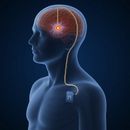
In conventional deep brain stimulation systems, electrical current is delivered through electrodes placed in specific brain regions responsible for controlling our movements. The intensity of the stimulation and other parameters are programmed by a specialist neurologist based on the patient’s clinical findings.
This treatment can help—among appropriately selected Parkinson’s patients—control tremor, muscle stiffness, slowness of movement, and medication-related motor fluctuations. However, even though a patient’s symptoms may change throughout the day, conventional systems mostly continue delivering stimulation according to a preset program.
What Is the Difference between Adaptive DBS and Conventional DBS?
In adaptive DBS systems, Deep Brain Stimulation (DBS) does more than just delivering stimulation—it also senses the brain’s electrical activity.
The system tracks specific brain signals associated with Parkinson’s disease. Within the safe limits and programming framework that the physician has set for the patient, it can automatically increase or decrease the stimulation level based on the signals it detects.
In other words, while a conventional Deep Brain Stimulation (DBS) works continuously with a preset program, an adaptive system first “listens” to the brain and then responds according to the patient’s needs at that moment.
That’s why Adaptive DBS is also described as a “closed-loop” DBS system:
Electrical activity is detected in the brain.
Signals are assessed according to criteria set for the patient.
The stimulation level is adjusted to match the need.
The brain’s response continues to be monitored.
One important point should be emphasized here: the system does not determine the treatment independently of the doctor. The brain signal to follow, the operating limits of stimulation, and the treatment parameters are programmed by the expert team for each patient individually.
What Can Adaptive DBS Provide for the Patient?
The main goal of Adaptive DBS is to deliver stimulation that is more responsive to the patient’s changing needs throughout the day and more personalized. This approach may help with:
More balanced management of motor fluctuations
Extending “on” periods** in which symptoms are better controlled
Reducing “off” periods** when movement becomes difficult
Limiting stimulation when it is more than necessary**
Decreasing the need for the patient to adjust stimulation settings**
In an international, multi-center study evaluating the effectiveness and safety of Adaptive DBS, 45 patients with mid-to-advanced Parkinson’s disease were assessed; all of them had previously benefited from conventional deep brain stimulation therapy.
Using a dual-threshold adaptive program, patients reported—on average—1.3 more hours of well-controlled “on” time per day* and 1.6 fewer hours of “off” time per day* compared with conventional DBS.
After a 30-day assessment, 98% of participants said they preferred to continue with the adaptive system.
That said, these results do not mean that Adaptive DBS will be more successful than conventional DBS for every patient. Because the study involved a limited number of participants and some comparisons were not blinded, larger-scale and longer-term research is needed.
Is Every Parkinson Patient Suitable for Adaptive DBS?
Neither conventional DBS nor Adaptive DBS completely eliminates Parkinson’s disease or stops its progression. Both treatments aim—when appropriate for the patient—to help control symptoms and improve quality of life. Also, not every person with Parkinson’s is suitable for Conventional DBS surgery or for Adaptive DBS.
Suitability should be evaluated together considering factors such as:
The patient’s age
The duration of the disease
Response to medication
Predominant symptoms
Cognitive and psychiatric status
Brain imaging findings
The nature of the brain signals that can be recorded
For a successful treatment, just as important as selecting the right patient is:
Placing the electrodes in the correct target area
Identifying the appropriate signal
Programming the system by an experienced team
A New Phase in DBS Treatment
DBS therapy is no longer only about delivering continuous electrical current to specific brain regions. Systems that can record brain signals and adjust stimulation according to the patient’s changing needs are opening the door to a new era in neuromodulation.
The most important feature of Adaptive DBS is its potential to make Deep Brain Stimulation (DBS) therapy more personal and more dynamic. In the future, as different brain signals and data from daily life are also incorporated into treatment, brain pacemaker systems may be managed with even greater precision.